

I’m Teague de La Plaine. This is Open Logbook—a public log of observations on humanity, shared systems, and the long future.
The richest person in America has more wealth than some nations. What if that simply wasn’t possible?
Most political debates focus on the poverty line. We argue about minimum wages, affordable housing, healthcare, and food security. We ask how low is too low.
Almost nobody asks the opposite question:
How rich is too rich?
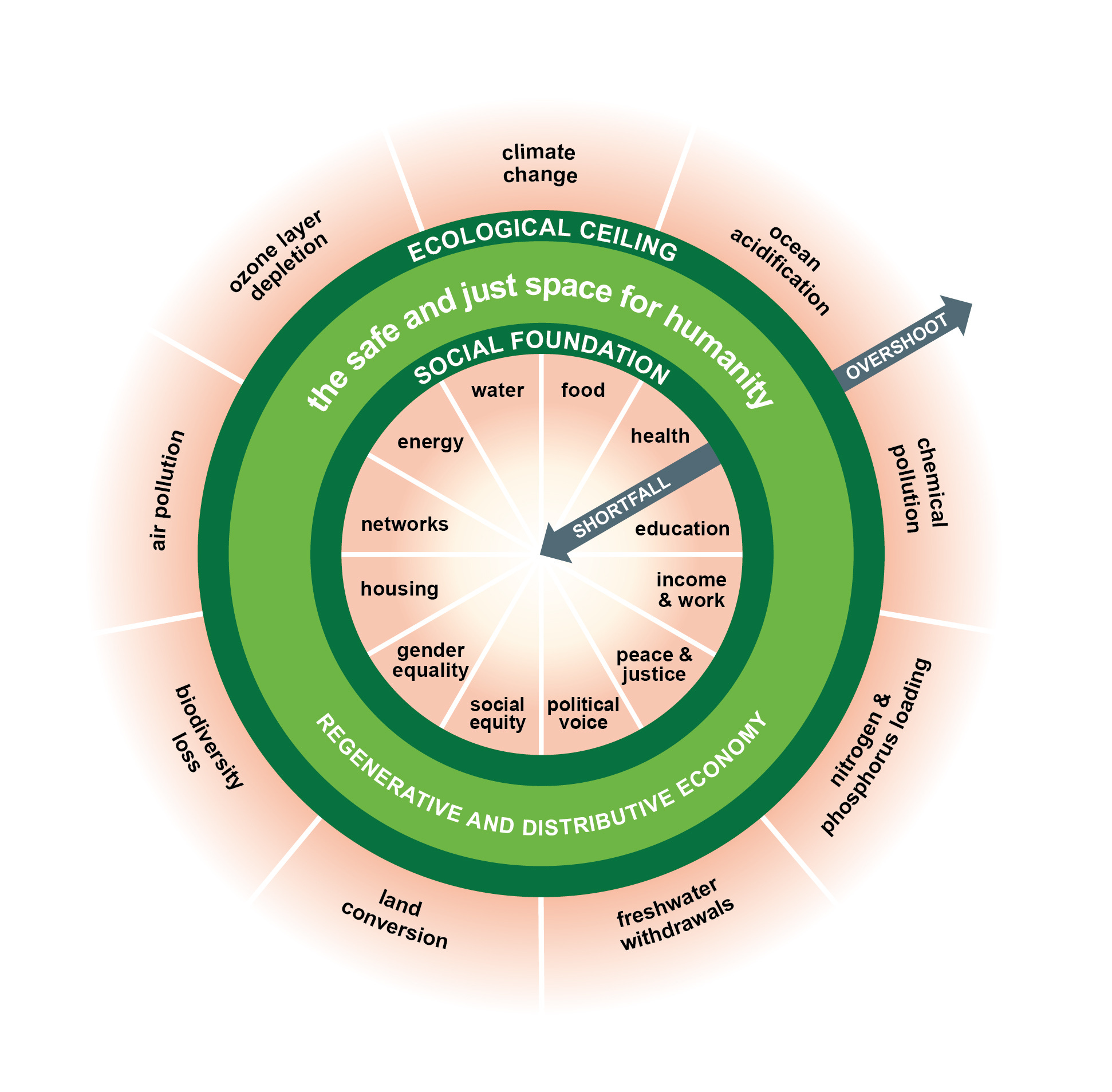
Economist Kate Raworth’s Doughnut Economics gives us a useful framework. Imagine society as a doughnut. The inner ring is a social foundation beneath which nobody should fall. The outer ring is an ecological ceiling beyond which humanity begins damaging the systems that support life. Prosperity exists in the space between.
What if wealth worked the same way?
Today, wealth has no ceiling. We have minimum wages, but no maximum fortunes. The result is a world in which a handful of individuals control wealth measured not in millions, but in hundreds of billions.
Many people immediately recoil at the idea of a wealth cap. It sounds punitive, anti-success, or anti-innovation.
But consider a different approach.
Instead of setting an arbitrary dollar limit, tie the maximum allowable wealth to the median household net worth.
For example:
No individual may possess net assets exceeding 1,000 times the median household net worth.
The current median American household has a net worth of roughly $200,000. Under this formula, the wealth line would be about $200 million.
Pause for a moment.
A person with $200 million can own homes, travel freely, support causes they believe in, start businesses, invest in new ideas, and ensure financial security for generations. This is not a proposal to eliminate wealth. It is a proposal to eliminate oligarchy.
The distinction matters.

Today, extreme wealth creates extreme power. Vast fortunes purchase media companies, influence elections, shape legislation, fund lobbying networks, and increasingly allow individuals to act on a scale once reserved for governments.
The issue is not luxury. The issue is sovereignty.
The most interesting feature of a relative wealth line is that it changes incentives.
Under our current system, the wealthy can increase their fortunes even while the typical household stagnates.
Under a median-linked wealth line, the ceiling rises only when the middle rises.
If the median household’s net worth doubles from $200,000 to $400,000, the wealth line doubles from $200 million to $400 million.
For perhaps the first time in history, the richest citizens would have a direct financial interest in helping everyone else become wealthier.
The game changes from extracting value to creating broad prosperity.
Would this eliminate entrepreneurship? No. Businesses could still grow. Innovation could still occur. Investors could still become wealthy.
The difference is that ownership beyond the wealth line would gradually flow into a public trust held on behalf of all citizens.
Imagine a Commons Fund that owns portions of major enterprises and returns dividends to society through infrastructure, healthcare, education, ecological restoration, or direct citizen payments.
Over generations, every citizen becomes a shareholder in civilization itself.
There would be challenges.
Tax avoidance would need to be aggressively addressed. Offshore wealth would need transparent reporting. Charitable foundations could not be used as personal piggy banks. Inheritance would need limits to prevent hereditary dynasties.
These are not small reforms. But neither is the problem.
We already accept that nobody should starve while others feast. We accept speed limits, pollution limits, and fishing limits. We recognize that some forms of excess damage the commons on which everyone depends.
Perhaps wealth concentration should be viewed the same way.
The question is not whether people should be allowed to become rich.
The question is whether any individual should be allowed to become so rich that they rival the power of democratic institutions themselves.
A civilization mature enough to establish a poverty line may eventually need the courage to establish a wealth line as well.
All One/Teague
